
14 Tough Perennials That Can Take Abuse (and Still Thrive)
Do you have area in your yard where you either have an existing garden, or a place where you’d like to plant a flower garden to add curb appeal, or just for your enjoyment, but not much will grow there. Perhaps the area has poor soil, either not enough water or too much water, salty road spray or it gets piled with a big heap of snow in the winter. What you need are tough perennials that can take abuse. Despite gardeners’ best attempts, sometimes plants have to survive without the best of circumstances and these perennials fit the bill.
This post may contain affiliate links. If you click on
one of the links and make a purchase,
I may receive a small commission at no additional cost to you.
See full disclosure here.
How These Tough as Nails Perennials Made the Cut
- These perennials can tolerate low water or drought conditions.
- The plants on this list can tolerate road spray and salt spray.
- They can tolerate poor soil conditions.
- These perennials can tolerate mounds of snow in the winter and snow melt in the spring.
Sample Garden with Perennials That Survive Abuse
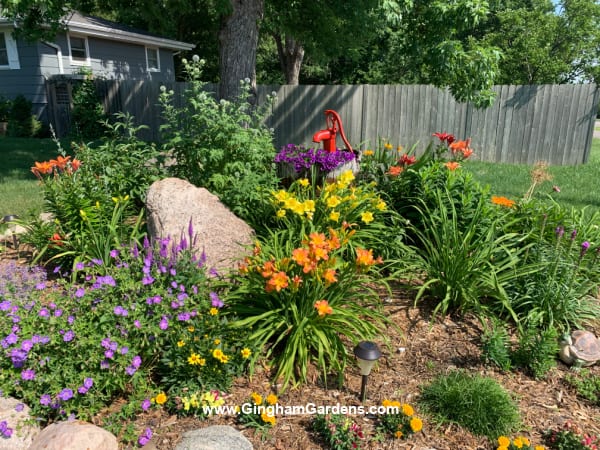
One of my favorite gardens is in an area on the corner of our ½ acre lot that borders two streets. The perennials in this bed are forced to survive pretty awful conditions. Not only does this bed look great, it is thriving in spite of all the abuse it endures. This flower garden has all of the conditions I list above. Plus, the snow plows push snow onto the garden from the intersection. So this flower garden has a 6 foot plus mound of snow on it for most of the winter. That snow includes salt and other muck and chemicals from the road. And sometimes the snow plows will scrape the surface of the soil.
For a little background on this flower bed, when we moved into our fixer upper home about 4 ½ years ago, this flower bed was just plain ugly. The bed had a diseased maple tree growing in it, so plants roots have to contend with the old tree roots. The previous owners had covered the mess with a layer of mulch to make it look okay for the sale. Once I started digging in, the mulch was covering about 6 inches of river rock with landscape fabric underneath. Check out this flower garden makeover when you’ve finished up here.
Although, I’m working on amending the soil, it’s still very rooty (my made up word), rocky and sandy, and I’m amazed that anything grows in this flower bed, let alone thrives. So plants in this garden have to not only be able to survive very dry conditions (because I don’t always drag the hose that far to water), they must be able to survive a wet winter and spring from snow pack and melt.
Perennials That Can Take Abuse and Thrive
This will be our 5th summer and I have lost many, many perennials in this flower bed. Here are the star perennial plants in that garden that have stood the test of time and actually thrived.
Daylilies – I don’t mean the awful hemerocallis fulva (a/k/a ditch lilies). I have 7 or 8 hybrid varieties of daylilies in this garden bed and they are thriving. Daylilies are definitely a tough-as-nails perennial that can take some abuse and thrive in spite of said abuse. My favorite daylilies are any from the “returns” family, like: Happy Returns, Rosy Returns, When My Sweetheart Returns and many more. Stella de Oro is another tough as nails daylily, but I think it’s overused.

Sedum – Not one of my favorite plants, but it wins in the category as tough-as-nails. I have dug up sedum and not gotten around to replanting it and it still survives. I think it could be run over by a Mack truck and it would survive. There are many varieties of sedum from low ground covers to tall plants.


