14 Plants Not to Grow In Your Garden (Even If They Are Free)
Many years ago when I first started dabbling in perennial gardening for myself, I was always on the lookout for free perennial plants and people were always willing to give away their extras once they knew I would take them. Talk about gullible!!! There’s a reason why people give plants away! Please learn from my mistakes (yes that’s plural, I wasn’t a fast learner) and don’t make space in your garden for these 14 Plants Not to Grow In Your Garden, even if they are free and even if you have lots of space to fill like I did.
How did these plants make my list? These are plants that I’ve had experience with or my gardening friends have had experience with. Some are considered invasive or aggressive spreaders and some just take up a lot of space when there are more attractive perennials that could be living in your garden instead.
Just a little disclaimer here. We have lots and lots of readers from gardening zones 3 through 10 here at Gingham Gardens. Pretty cool, right? What is considered invasive, aggressive or a vigorous spreader in one part of the country is not necessarily so in your gardening zone.
See my advice at the end of the post on how to determine the plants you don’t want in your gardens. Be sure to read through the comments section at the end of the post where readers have listed their nuisance garden plants and plants they wish they had never added to their gardens.
This post contains affiliate links. If you click on
one of the links and make a purchase,
I may receive a small commission at no additional cost to you.
See full disclosure here.
Let’s talk about a few definitions before we begin. Definitions for the terms invasive and aggressive are somewhat confusing. Departments of Natural Resources have websites (DNR websites) that define the terms invasive and aggressive. These definitions can vary from state to state. Different states have different plants that are considered invasive due to the way in which a particular plant thrives or not in that environment. What is invasive in one place may not be in another.
Randy and I are Master Naturalists. For us, an Invasive plant is a non-native plant that is undesirable, because it outcompetes native species an ecosystem. I have a plant that I adore which is native, but it ate 2/3 of my garden last year. It consumed some penstemons, a couple of rosebushes, some dianthus, a hummingbird bush…you get the idea. I had grown it before in another part of the state and it was very polite. Where we live now has better soil and more water and man, it “went to town!” Butterflies love it! It’s easy to pull up. My Master Naturalist friends here turned it down when I offered some to them. They knew what I didn’t. To Master Naturalists, this plant is Aggressive.
Sco we’ll call a plant that spreads faster than preferred, or into an area of your garden where it’s not wanted (paraphrased from Chicago Botanic Garden website) Aggressive. to Master naturalists, a native plant is not Invasive.
Not all plant enthusiasts think this way, but sa new Master Naturalists, if we use the wrong term, we get corrected!
Plants Not to Grow in Your Garden – Invasive/Aggressive Perennials to Avoid
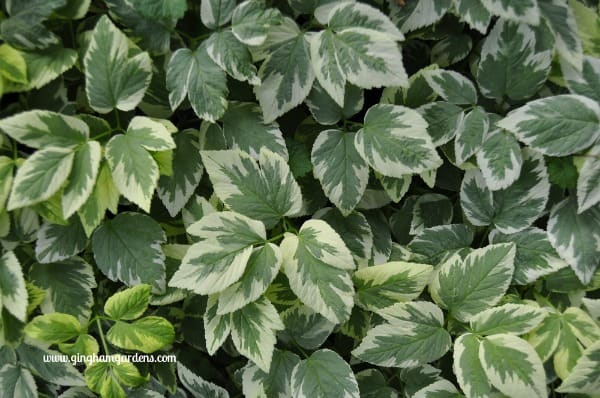
Snow-on-the-Mountain (aegopodium podagraria) – a.k.a. Bishop’s Weed or Gout Weed – Hands Down this plant wins first prize of the Worst Plants to Grow In Your Yard!
This is a plant that was introduced from Europe, so here, it’s Invasive! If you’ve ever tried to eradicate this “noxious weed” from your garden, you know exactly what “invasive” means! When someone offered me some, I thought, what a pretty ground cover with its variegated leaves and tiny white flowers. Ground cover indeed and it also covered everything in its path.
Snow-on-the-Mountain is so invasive and its root system consists of underground runners that will take over a small garden in one growing season. I worked for probably 3 growing seasons eradicating it from my shade garden. Do not let this beauty fool you!
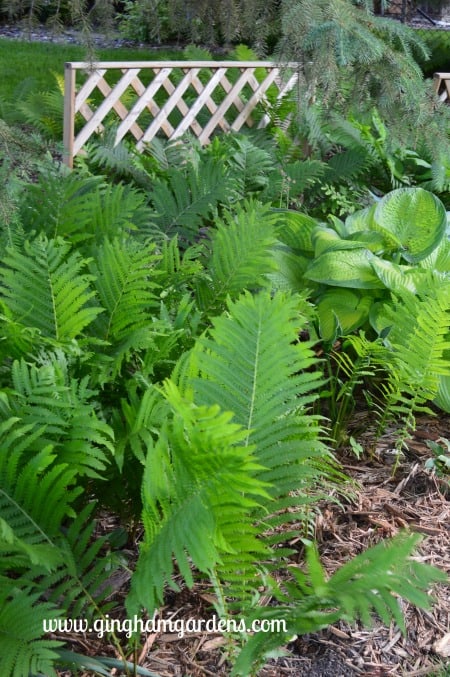
Ostrich Ferns (matteuccia struthiopteris)- Ostrich Ferns are native to North America. They are just gorgeous and oh, those cute little fronds in early spring. And, yes they do offer some wildlife benefits. But, in some parts of the country, they are Aggressive and will take over a small space licit split! They especially love moist soil.
Ostrich Fern is another plant that spreads by underground runners and is one of those plants not to grow in your shade garden. If you have a damp wooded area where nothing else will grow and you’re never going to plant anything else there, perhaps Ostrich Ferns would be okay. But, proceed with caution! For shady areas where you would like ferns, try Maidenhair Fern or Japanese Painted Fern.
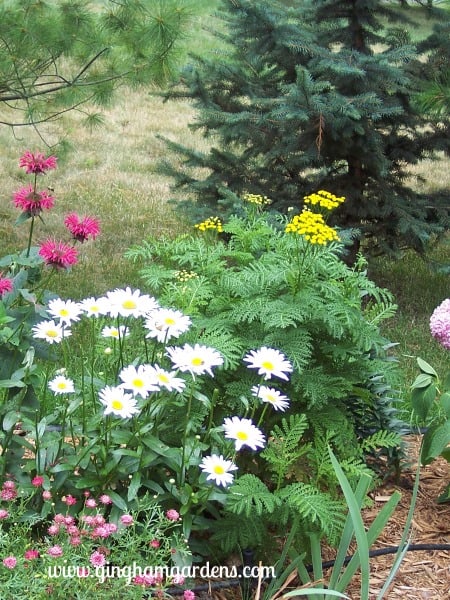
Tansy (tanacetum vulgare) – Native to Europe and Asia, tansy is a perennial flowering herb that has a spicy kind of scent and is said to ward off mosquitoes. Long ago it was used for medicinal purposes.
It has ferny type foliage that looks great all summer and the cutest little bright yellow flowers. Don’t be deceived by my charming description. In addition to being Invasive in certain parts of the county, the oils in tansy are highly toxic so be sure to wear gloves when handling it.
I have planted tansy before but gave up on it because it didn’t grow into the beautiful plant I had seen in pictures. BUT, in some locales it will thrive in a full sun garden and spread into the grass and encroach on neighboring plants. What a mess and another pain plant to get rid of if this matches your experience!
Honestly, I look at the picture below and think what a pretty plant and it looks so good with the Shasta daisies, I want some. Fight that urge, you crazy woman!
Save this Pin to One of Your Gardening Boards on Pinterest for Future Reference.
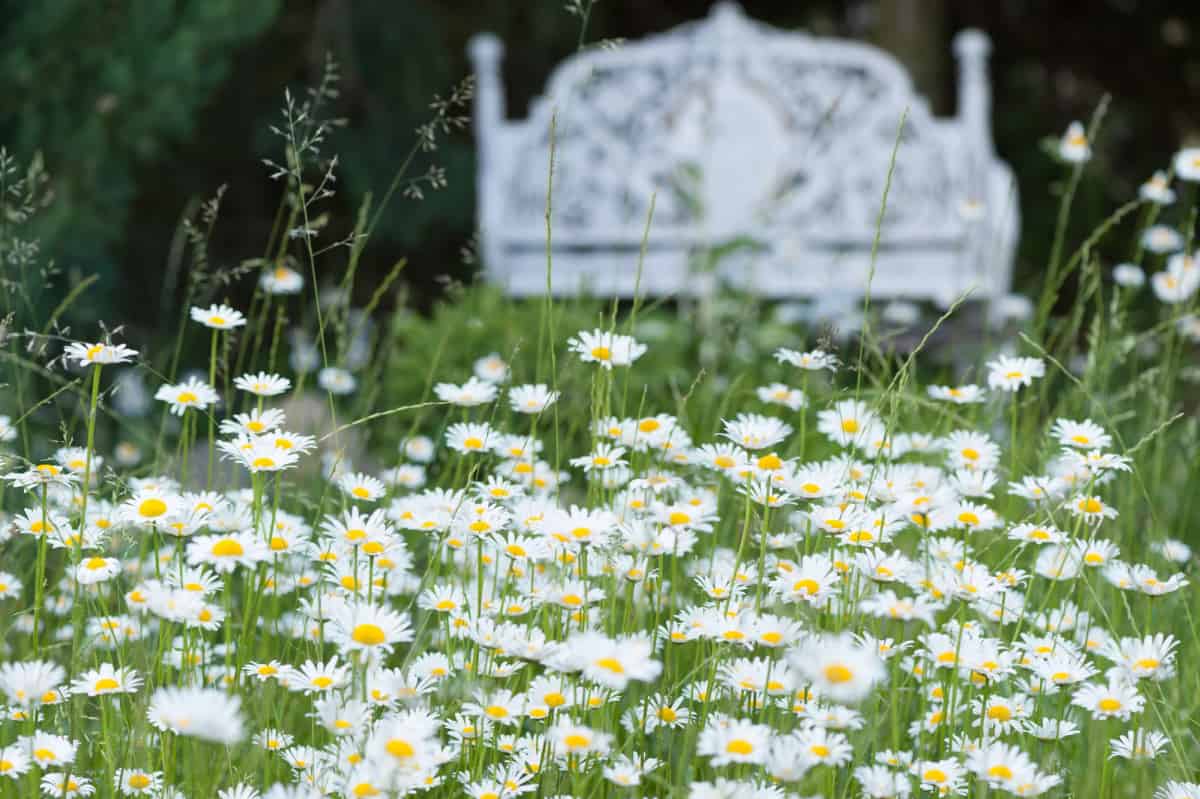
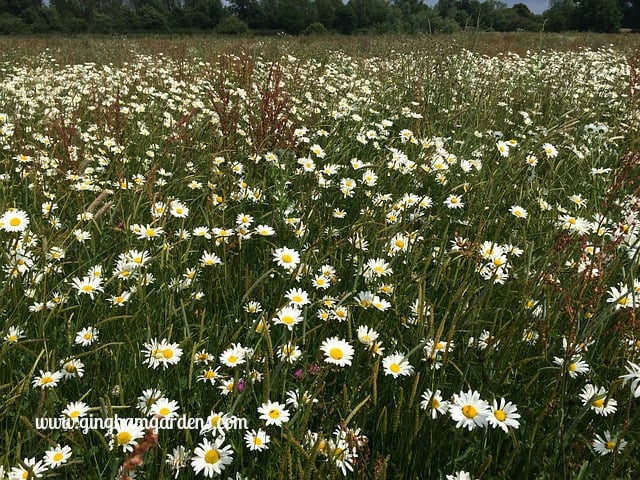
Ox-eye Daisies (chrysanthemum leucanthemum)- such a pretty little daisy that can easily be mistaken for shasta daisies (chrysanthemum x superbum). It is another introduced species and is considered to be an aggressive invasive plant!
They may look pretty along roadsides, but not only do they not belong in a home garden, they don’t belong along our roadsides, as pretty as they are. They outcompete the native wildflower species. Check your state’s DNR website, ox-eye daisies are considered invasive in many states.
Creeping Bellflower (campanula rapunculoides) –
There are many, many varieties of campanula and lots of them are very well-behaved. Creeping Bellflower is not one of them and is listed in many regions as an invasive introduced species. It is like the thug of a perennial garden. It has pretty little bell shaped, purple flowers and that’s why many gardeners are fooled by it.
According to the Missouri Botanical Garden website, not even herbicides, which I avoid, are guaranteed to take out this plant! It has a very long”evil some say” taproot, that breaks off with a sneeze, so avoid this plant!
Other varieties of campanula are quite aggressive too, so just be careful and do your research before you purchase campanula.

Ribbon Grass (phalaris arundinacea ‘Picta’) – Oh, how I loved this variegated ornamental grass when I first saw it in my friend’s garden. She told me it was naughty, but I had to have it anyway. I had to work to keep it contained.
Please take a look at how well-behaved it looks in the picture below. Sorry, it is an illusion! When we moved to our current home, there was tons of ribbon grass and I set out right away to get rid of every last blade of it. This one is listed as invasive in some areas.

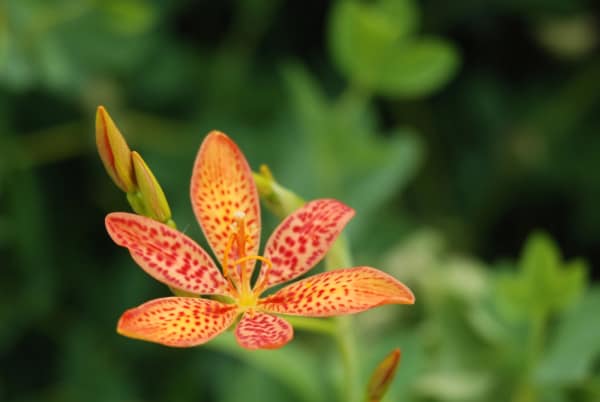
Blackberry Lily (Belamcanda chinensis) – Another introduced species that is aggressive in many parts of the country. Since it’s introduced, it qualifies for the term invasive.
The blooms are interesting, but mostly just meh. There are so many other perennials that are prettier and bloom longer. They spread by seeds and are invasive in many areas of the US.
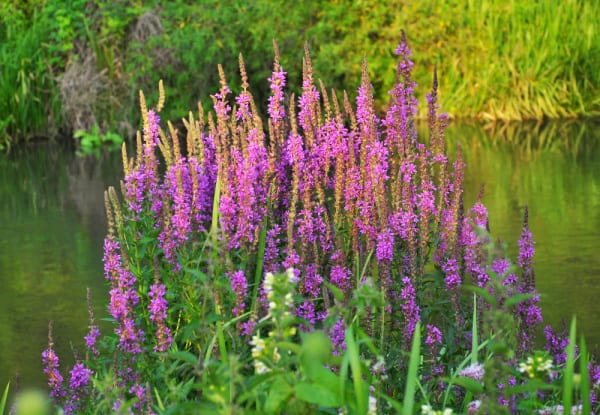
Purple Loosestrife (Lythrum salicaria) – not to be confused with gooseneck loosestrife because they are in completely different families. Purple loosestrife is a beautiful plant with long plumes or spikes of small purple flowers that thrives in wet soil. I’m adding this one because every summer when this plant is blooming along ponds and drainage ditches, I see unsuspecting gardeners in Facebook gardening groups wanting to know what it is, so they can dig it up and add it to their gardens. Just don’t! Not that we’re the gardening police here, but it’s illegal in many states to transplant invasive species. It is a serious invader!
More Perennials Not to Grow in Your Garden
These perennials may not be as “ahem”, enthusiastic growers as those previously mentioned, but they are definitely vigorous spreaders. Some are considered invasive because of this tendency and because they are introduced to North America. Most gardeners would be better off not bothering with them.
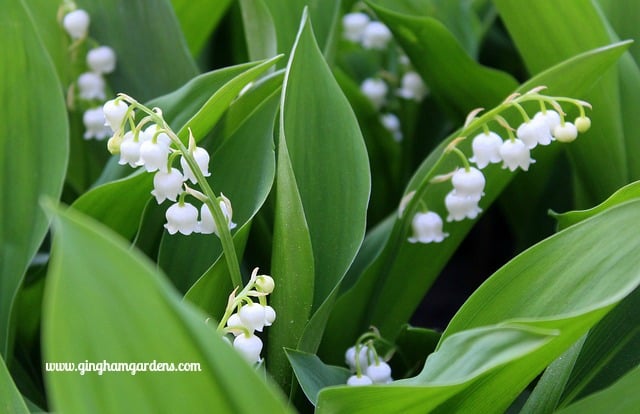
Lily-of-the-Valley (Convallaria majalis) – The flowers on lily of the valley are so sweet and their fragrance is heady. I love to pick bouquets of them and bring them indoors. That being said, if they weren’t already in my gardens from the previous owners, I would not add them.
Lily-of-the-Valley bloom for such a short time, that I don’t think they are worth their trouble. They have an aggressive nature and do not stay where you put them despite efforts to contain them. Don’t be swayed by this picture, or their fragrance – stay strong! They are introduced.
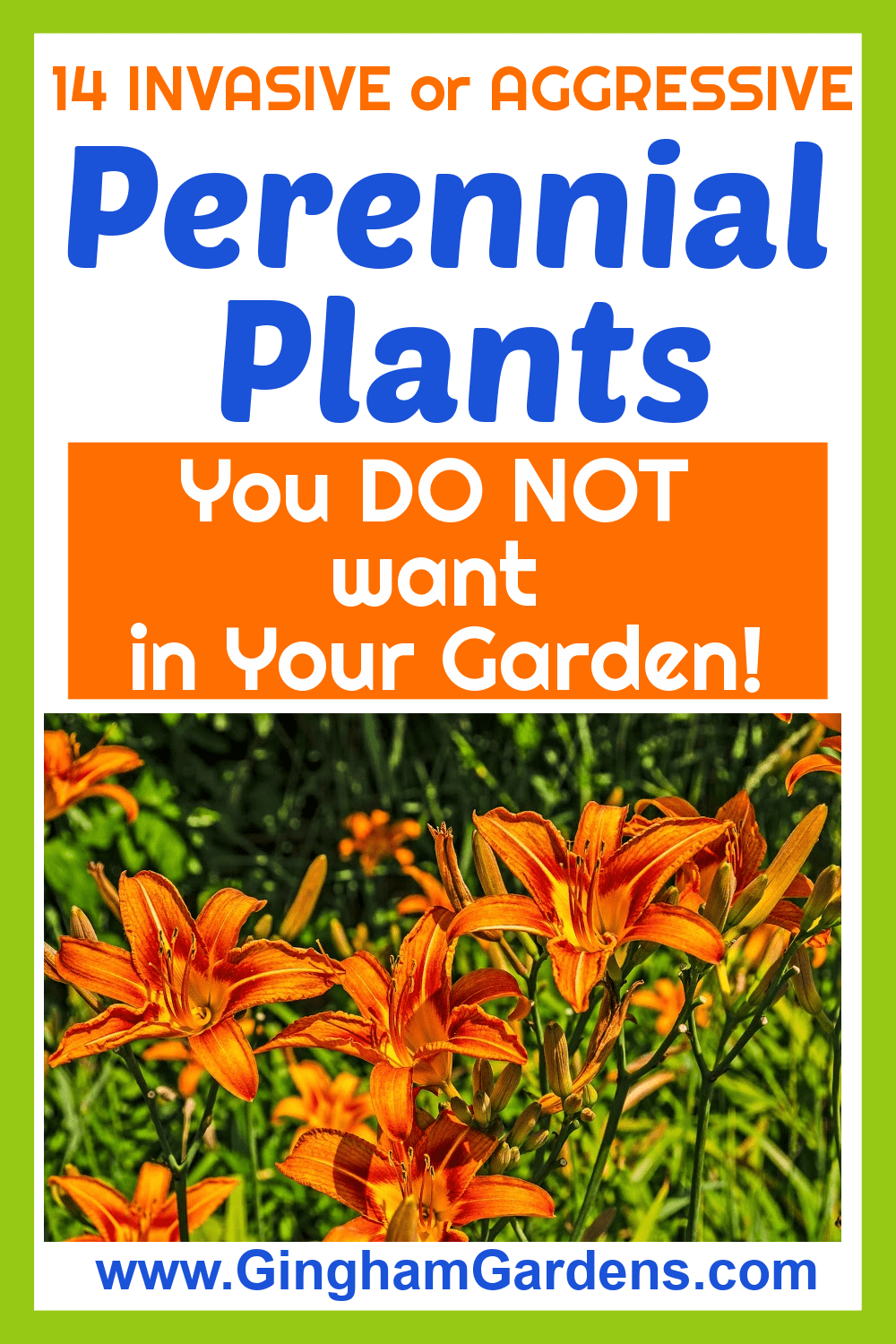
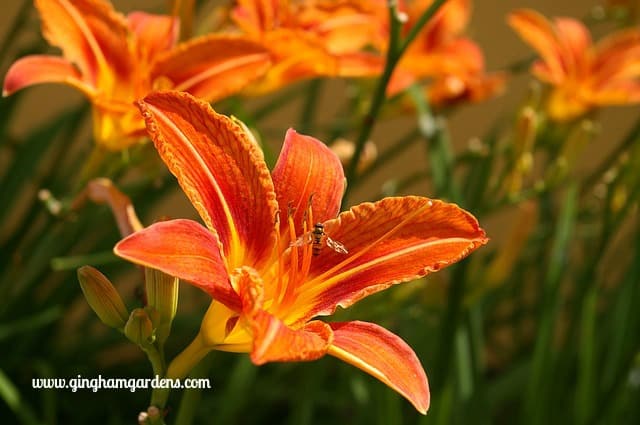
Tawny Daylily (hemerocallis vulva) – You may have seen these growing along roadsides where you live and in ditches even! I commented to my sister-in-law, who lives in Kentucky, that I thought they were pretty and I wanted some. She informed me that I did not want Ditch Lilies! Our mutual mother-in-law had some in San Antonio and I did see that they were a problem at all.
To be honest, they are introduced, as are most of the plants we use in our gardens. Some people like them because they are pretty, low maintenance and easy to grow. They also are prolific spreaders in some parts of the country and introduced. In these places, they crowd out other plants as well, so they are considered invasive. If you don’t want them in your yard, you may find them to be hard to get rid of. In San Antonio, they just fizzled out when my mother-in-law quit watering them.
If you are a daylily enthusiast, there are so many (100s) of fabulous cultivar and hybrid daylilies, you will find that you are missing out of if you let ditch lilies take up the space.
Personally, I like ditch lilies and think they’re really pretty, but I’ve never had to tangle with them. They are invasive, however, so from a philosophical standpoint, I would prefer to have native flora in the ditches. Just my opinion.
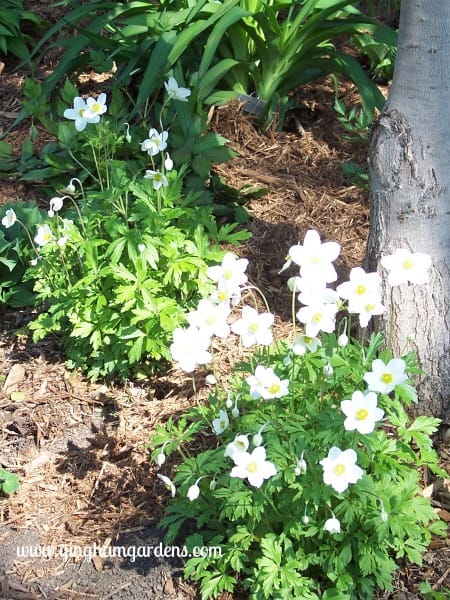
Anemone (anemone sylvestris) – Again there are many different varieties of Anemone, some of them well mannered, but this particular spring blooming Anemone Sylvestris, not so much. It is an introduced species. These pretty little white wind flowers spread like wildfire in certain parts of the country.
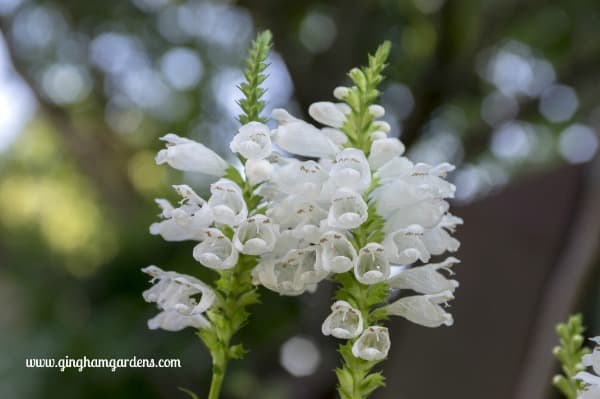
Obedient Plant – It’s called “obedient” because you can bend the stems to face the direction you want them to face. This pretty white version is an “improved” form of the native obedient plant. The native one is lavender. I will say, if you are into a tidy garden, this is not the plant for you.I guess you could call it aggressive! It spreads by underground rhizomes and is anything but “obedient.” It even spread to the neighbor’s yard.
If you can’t resist obedient plant, look for the Miss Manners series. They are not supposed to be spreaders and will remain in a nice, tidy clump.
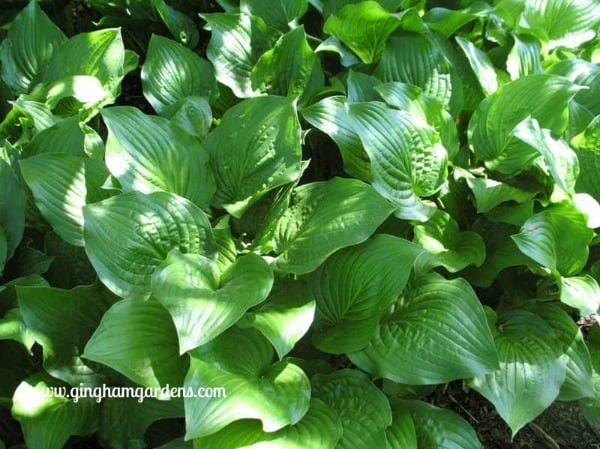
Royal Standard Hosta – I’ll bet you didn’t expect this one on the list and I know I’ll take some heat for including it. First of all, I’m not bashing all hostas as Hostas are quintessential low-maintenance plants for shade gardens. There are so many beautiful varieties of hosta for shade gardens.
Beginner gardeners or new home owners are so excited to get free plants that they don’t stop to think about how these freebies are going to look in their gardens in 2 or 3 years. In my opinion, royal standard hostas (the very common plain green hostas) just aren’t all that pretty. And, they are definitely the most prolific hosta out there. After all, that’s why they are free. Plus, slugs are so happy when you add royal standard hostas to your garden.
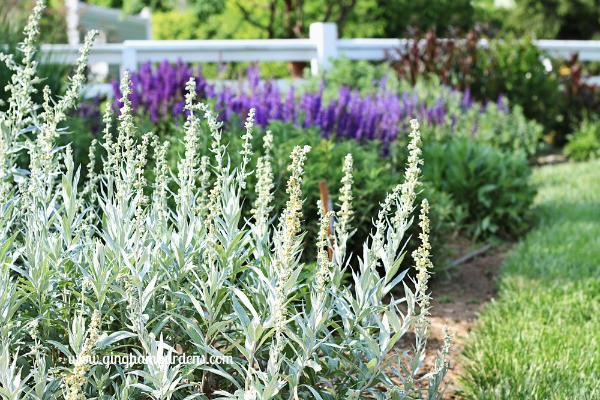
Lamb’s Ear (stachys byzantina) – Lots of gardeners have Lamb’s Ear because it spreads like crazy and gardeners just keep giving it away and that is why it made the list of plants not to grow in your garden. It is introduced, but not considered to be invasive even though it spreads.
The foliage on Lamb’s Ear is pretty and it adds a cool texture element to a flower bed. That being said, once it starts flowering, it gets sort of ratty looking, and the flower heads are not all that attractive.
It just takes up too much real estate in the flower garden. Lambs Ear is a known bee magnet which is good, but there are tons of other prettier flowers that are bee magnets too. Plant a native plant instead. They’re better for bees, birds and wildlife. I say, pass on the lamb’s ear.
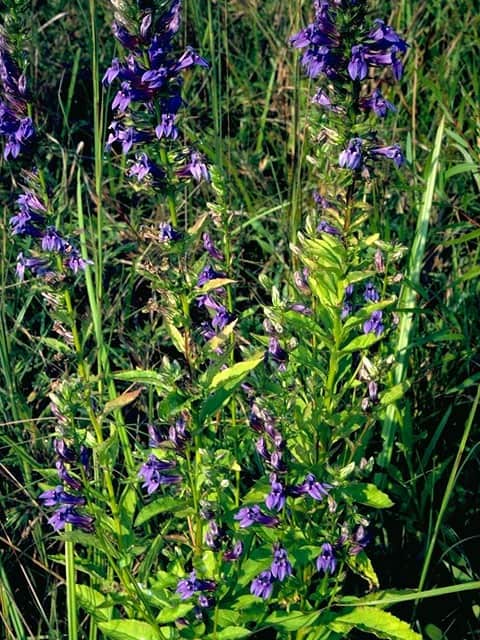
Blue Lobelia (lobelia siphilitica) – Not to be confused with the annual lobelia variety or the red perennial Cardinal Flower (lobelia cardinalis). Blue Lobelia is a native wildflower that is very pretty when it is blooming (for maybe 2 weeks), but it spreads by seed and the following spring there are lobelia seedlings everywhere.
Although this is considered a short-lived perennial, it lives on and on and everywhere by reseeding. I love wildflowers and this one is pretty. But, I love so many plants, even natives, so I would choose to have something else.
Introducing – Designing with Perennials for 3 Seasons of Blooms
flowers blooming from early spring right through fall?
Designing with Perennials for 3 Seasons of Blooms is a Workbook/Guide
to help you create a perennial flower garden that has a succession of
continuous blooms from early spring through fall.
The Guide walks you through each step from designing your dream
3-season perennial garden on paper to executing your plan in the garden.
The Plant Lists in the Guide include over 90 Perennial Flowers
categorized by bloom time, sun requirements, zone, deer resistant,
rabbit resistant, cutting flowers and pollinator friendly.
The Guide is very reasonably priced, so stop and get your copy soon.
How to Avoid Getting Invasive Perennials
The good news is that you can avoid adding these bad plants to your garden beds.
I love going to other gardener’s plant sales, but unfortunately, that’s where I’ve gotten a lot my worst offenders on the Plants Not To Grow In Your Garden list.
Most of the plants that made my list are also readily available at local garden centers too. So how on earth is a beginner gardener, or even a seasoned gardener like me, supposed to avoid ending up with perennials that will take over your garden? My best advice is just to read up and ask questions.
Now, if I see a plant that I don’t have and I’m curious about, I will ask the gardener these questions:
- Is this plant a vigorous spreader or aggressive? If so, is it easy to weed out?
- Does this plant spread by underground runners?
- Is this plant invade other parts of your garden?
- If you’re shopping in a garden center, be sure to read plant tags and look for the word “aggressive” or “fast grower.”
If there isn’t anyone available to help me, I will pull out my cellphone, google the plant name, and quickly read up on it. Check our list of classic perennials and add those to your gardens instead. [ADD LINK]
Other Tips for Avoiding Plants Not to Grow In Your Gardens
Watch for the words: “vigorous spreader” or “aggressive.” Do your research and ask lots of questions. Even if you’re okay with having vigorous spreaders in your gardens, just know they can easily take over an entire flower bed and smother out other less vigorous flowers.
If you’re not planning on staying in your current home forever, you might consider not planting any of these plants. Another gardener may be less than thrilled to have to have to deal with one of these naughty plants.
Just because one variety of a certain perennial is considered invasive or a vigorous spreader, doesn’t mean all varieties or species are invasive or overly vigorous spreaders.
It’s interesting to see what’s considered invasive or aggressive in different areas of the country or different gardening zones. I recommend doing your homework up front and planning what plants you want to purchase for your gardens.
Google invasive plants in your state and see what comes up and make sure you don’t include those. Also, be sure to read the comments section below to see what other plants readers have listed as plants not to grow in your garden.
There are several perennials that others would call invasive or aggressive, but I did not include them on my list because I don’t have a problem with weeding them out and I like them enough that they are worth the trouble. These plants include bee balm, cherry bell campanula (and a few other varieties) and agastache. There are many low-growing perennials, or ground covers that some would consider too aggressive for their gardens. Some of those are creeping Jenny, lamium, ajuga and more. Remember the point of a ground cover is to cover the ground. Other perennials that reseed, like black-eyed Susan (rudbeckia hirta), balloon flower (platycondon) and coneflower (echinacea purpurea) can also be considered a nuisance to many gardeners.
Have you ever planted a perennial that you regret planting, or any on my list of plants not to grow in your garden? Please leave a comment and let me know (the easy-to-use form is at the bottom of the page).
Happy gardening,
Julie
Other Related Posts on Gingham Gardens that You Will Enjoy:
Classic Perennials (That Every Flower Garden Needs)
Creating & Caring For A Low Maintenance Flower Garden
Flower Gardening 101
Made in the Shade Gardens
Flower Garden Design
Flower Garden Maintenance
p.s. Please help me out by pinning some of the pictures in this post. If you hover in the upper left-hand corner of the picture, you’ll see the Pin icon. There are more pins to share at the bottom of this post. Thanks so much!
p.p.s. For more awesome gardening ideas and some beautiful gardening eye candy, follow Gingham Gardens on Pinterest.
Pins to Share: